This year marks 50 years since the release of the landmark motion picture The Exorcist, directed by the great William Friedkin (1935-2023) and scripted by comedy writer William Peter Blatty (1928-2017), based on his 1971 bestselling novel of the same name.
Warner Bros./Hoya Productions
Many people with whom I’ve discussed the movie have vowed never to see it again, not because of inferior quality but because it terrified them beyond what they deemed good fun.
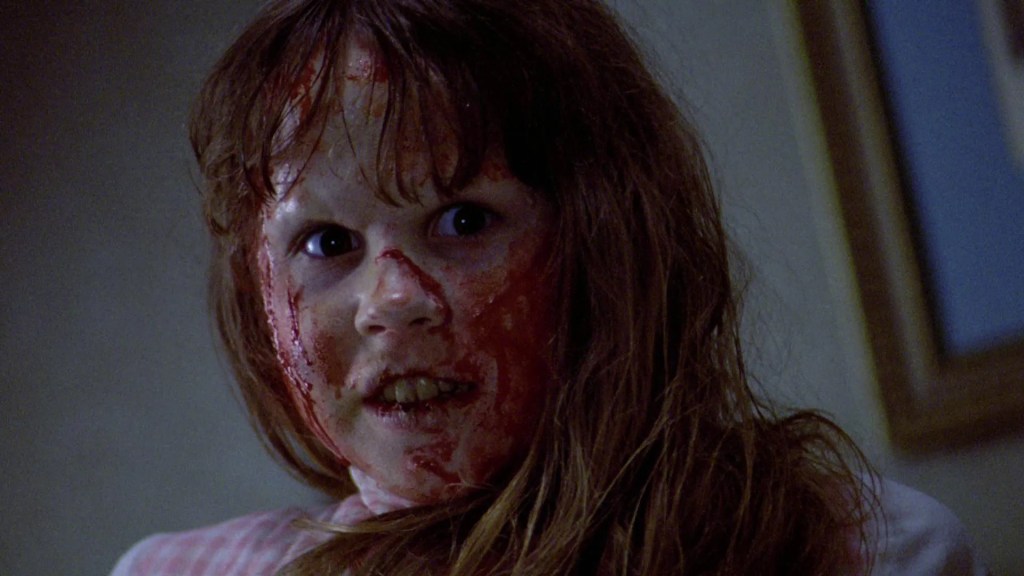
To be sure, The Exorcist is a visceral, harrowing experience, depending on one’s sensibilities or connection to religion. Though it’s usually billed as a horror picture, its director and writer insist that wasn’t the idea. Blatty, a student at Georgetown University in the 1940s, always posited that his story was about the mystery of faith. Philosophical questions are posed in the movie and, to a greater degree, in the novel. Friedkin, an atheist in the early 1970s, structured the picture as a big-budget thriller shot in a documentary style, with visual and aural elements audiences had never experienced in a film before. To be sure, there are sounds and images specifically designed to rattle the audience. If you’ve heard the lore about viewers fainting, puking, or dashing to confession, you might surmise Blatty and Friedkin did their jobs superbly.
Warner Bros./Hoya Productions
At its core, however, I believe The Exorcist is a detective story on multiple fronts. I won’t refute the book’s or the movie’s horrifying sheen or philosophical musings. But the picture, as does the novel, distills its events through the lens of skepticism on the parts of a Jesuit priest, who’s experiencing a crisis of faith, and the homicide detective, a Jew who’s logged many hours on the job and wrestles with the nature of evil. Both men attempt to reconcile a just god and why he would allow evil to run amok in the world.
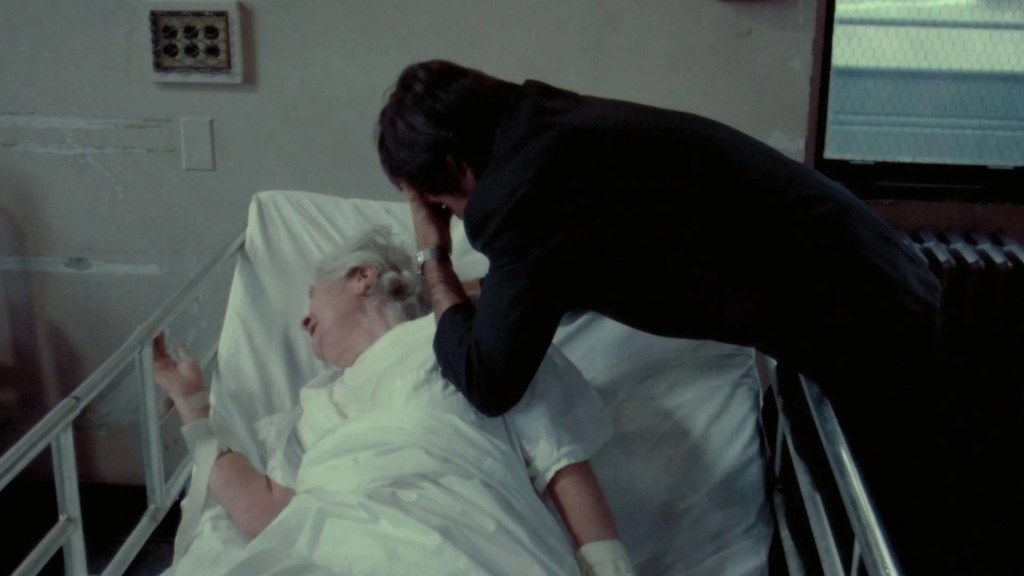
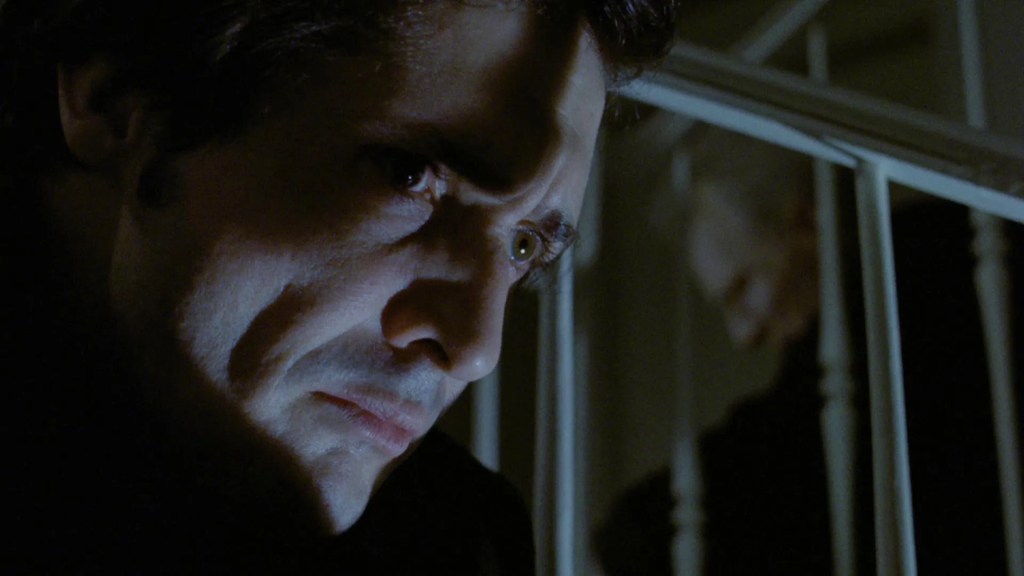
The priest, Fr. Karras, is tormented by the guilt of living and working in Washington, D.C., while his infirm mother lives alone in a grimy neighborhood in New York City. When Mrs. Karras dies, and the priest is at the nadir of his faith, he is approached by a desperate Chris MacNeil, an atheist, to exorcise a demon from her 12-year-old daughter. Reluctantly, he examines the afflicted girl and begins his investigation as to whether or not the anomalies manifested in the girl warrant an exorcism ritual by the Church.

Warner Bros./Hoya Productions
Warner Bros./Hoya Productions
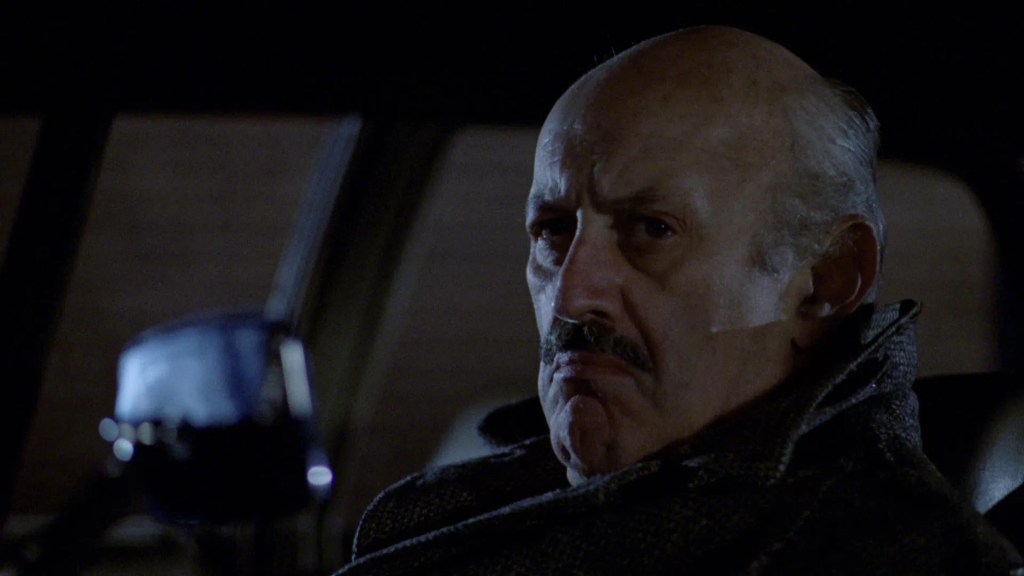
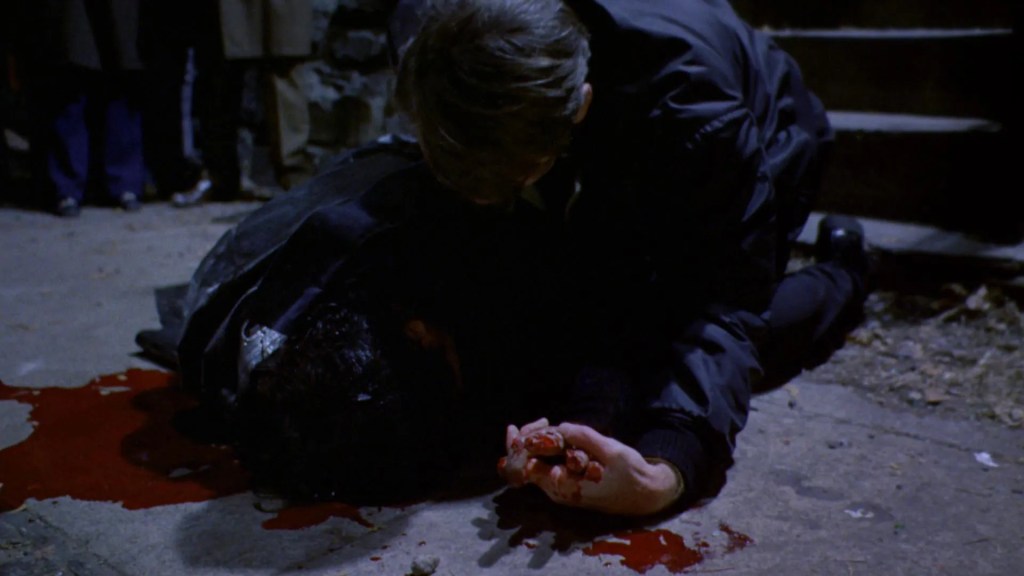
The homicide detective, Lt. William Kinderman, is looking into the recent death of an infamous movie director on an ominous stone staircase alongside the MacNeil home. Though critical thinking tells Kinderman the director’s death resulted from an altercation with a “powerful man,” Occam’s Razor dictates instead that a supposedly ill 12-year-old girl is the killer, a notion he finds difficult to wrap his logic around.
Warner Bros./Hoya Productions
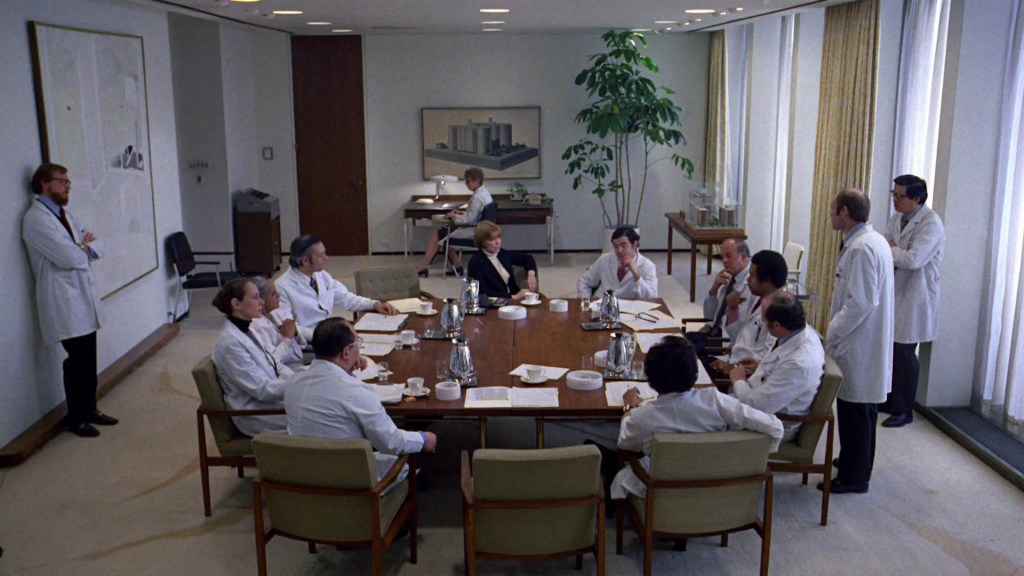
Even the doctors are trying in vain to determine what’s wrong with this otherwise angelic kid. With a hefty dose of hubris, the medical specialists use all the cutting-edge technology at their disposal to get to the bottom of this confounding mystery, only to pass her along with a shrug to the clergy, stating she’s normal. Of course, we already know the answer, but we see their gruesome process of elimination.
Warner Bros./Hoya Productions
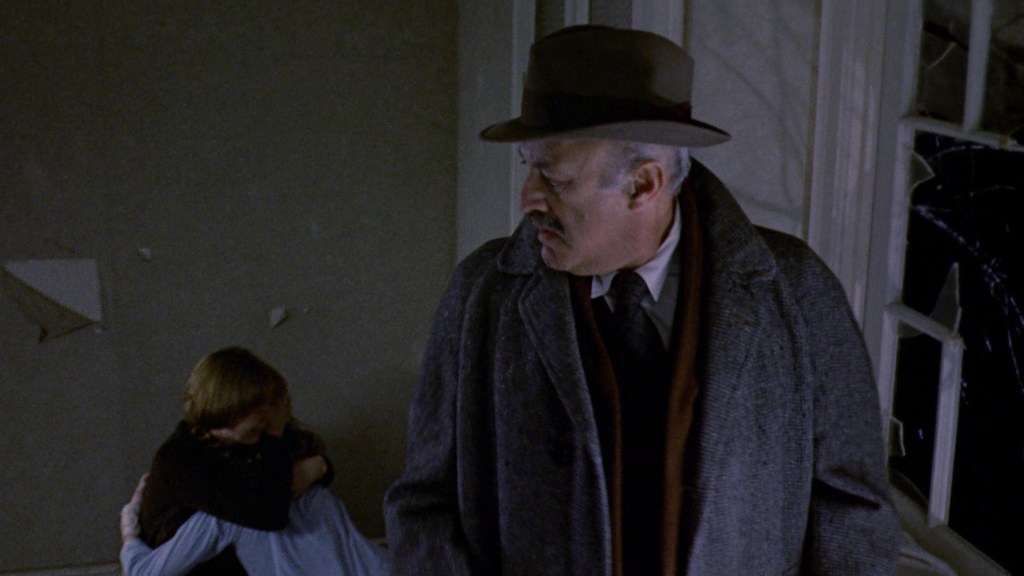
Blatty’s Exorcist sequel, Legion, published in 1983, goes all in on the eerie detective story framework, porting over Lt. Kinderman as its protagonist. In it, Kinderman is investigating a series of murders whose clues match the unpublished calling cards of a long-dead serial killer. Many kudos to Mr. Blatty for even attempting to top his original shocker, The Exorcist. He almost pulled it off. Blatty had designs to create a motion picture from the new novel. However, the film sequel, 1977’s Exorcist II: The Heretic, a decidedly inferior money grab from Warner Brothers, made the idea of another sequel dubious. Blatty scripted and directed the picture himself, which he titled Legion. While the picture closely followed Blatty’s novel, the suits at Morgan Creek, the production company which now owned the rights to produce sequels in the Exorcist franchise, were baffled. Firstly, they didn’t like the title, insisting it should be called Exorcist III, which more clearly tied it to the first film (even if it reminded audiences there was an Exorcist II). Plus, the title suggests there should be an exorcism, which Blatty’s cut and his novel didn’t include. This input from the C-suite did nothing more than exploit a “brand” where Blatty’s vision was so much more.
Warner Bros./Hoya Productions
Blatty was then forced to turn his murder mystery into a cheap horror trope of a supernatural genre that The Exorcist spearheaded! Blatty ultimately had to invent a new character, Fr. Morning, re-edit his footage to accommodate the additional scenes, and add schlocky imagery involving a crucifixion statue that bleeds and opens its eyes, church doors being blown open by ill winds, etc. An intro with a silk-suited studio executive thumbing his nose at the audience would’ve been just as appropriate.
That said, The Exorcist III, finally released to theaters in 1990, wasn’t nearly as bad a picture as it could’ve been. Blatty’s humor and knack for unsettling atmosphere are still felt. I’m typically averse to tiresome jump scares that startle audiences rather than scare them, but this film boasts one that works beautifully for pure fright. If you know, you know.
Warner Bros./Hoya Productions
Celebrate 50 years of The Exorcist by looking at it again through a different genre filter, with some genuine scares besides.
On September 19, Warner Bros. will release new 4K UHD restorations of the original 1973 cut and the 2000 “Director’s Cut” for the original’s 50th anniversary.
 Brad Wilson